Posts

Assistive Devices - Biomechanics #6

   There a many reasons why it is important to appropriately fit a client for the use of an assistive device. There are multiple factors in determining the right assistive device for a client. These factors include the client's environment, physical condition, age, psychological condition, safety, and endurance. It's important to account for all of these considerations when determining the right fit for the client. The physical condition plays a big role in choosing an assistive device. Considering if the client can bear weight or if they have the strength to support themselves on the device is very important. The environment also plays a critical role in choosing an assistive device because some spaces may be too small for a certain device or it could cause a safety hazard. Safety is a crucial factor when choosing the right device for a client.     To fit a client with a cane, it should be determined if the client needs a quad cane or a standard cane. Cane...
Proper Posture and Body Mechanics - Biomechanics #5

Image
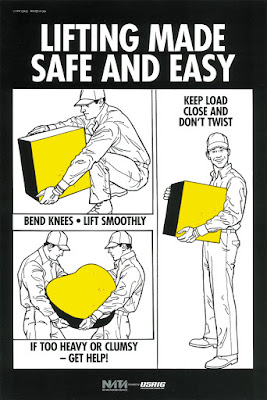
  There are many reasons why it is important for occupational therapists to educate clients who have faulty posture and poor body mechanics on how to properly correct them. One reason why it is important to teach proper posture is because postural issues can lead to abnormal development of various mechanisms in the body. This includes development of bones, muscles, and tendons. It is crucial for proper posture and body mechanics to be taught to a client because it can help with pain prevention. When improper positioning of the body occurs for a length of time it can lead to damage which can cause pain while doing everyday activities. It’s important to teach clients proper body mechanics because poor body mechanics can lead to injury. These injuries can occur at home but they especially can occur while doing a job task. It is also crucial to prevent the client from having poor body mechanics and posture because it allows the body to function to its highest potential. When there is g...

Man From The South - Biomechanics #4

Image
   In the story, A Man From The South , the wife only had a thumb and one other finger. This would impair her grip strength in many occupations. This 5th digit or pinky finger, although very small, is important for grip strength. One occupation that the wife may have trouble with is gardening. In gardening, you need to use a power grip for many tools like a shovel or fork tool for digging dirt. Because she only has her thumb and one other digit, it would be best to use an adaptive device with ergonomically angled handles. The handle would be at a 90 degree angle and it would have thick rubber grips for grasping. This would allow her for a better grip on her gardening tools. Retrieved from:  https://www.amazon.com/Easi-Grip-Garden-Tools-Set/dp/B006YB5TNM

Knowledge Check - Health Literacy

   I learned many things about health promotion, literacy, and prevention during Dr. Flick’s lecture. One thing that I took away from the lecture were the different types of prevention interventions. There is primary, secondary, and tertiary prevention interventions. I learned that hospital’s aim for primary prevention because it’s best to prevent the disease or injury all together. The secondary intervention is when the impact from the disease or injury is reduced. An example of this would be to work with someone who is a pre-diabetic and to help them manage ways they can keep themselves healthier to prevent diabetes from emerging. The tertiary intervention is limiting the impact of the disease or injury. I also found it interesting that a study was done by epidemiologists to find the most cost efficient profession and that OT ranked #1. It really shows that OT’s can make a difference in client readmission to the hospital and that our speciality represents holistic, effective...

The Scapulohumeral Rhythm - Biomechanics #3

    There are several reasons why the scapulohumeral rhythm has clinical relevance. The first reason would be that it allows the muscles involved to be in an optimal length tension relationship. The kinetic relationship between the scapula and the humerus must be synchronized. It allows the motion to be shared between two joints. It allows for joint congruency for the reduction of shear forces. The ratio of movement for the scapulothoracic joint is 1:3 and the ratio of movement for the glenohumeral joint is 2:3 for a full 180°. Therefore, if the client is in the proper position, there should be 60 ° for upward rotation of the scapula and 120 ° for the glenohumeral joint.  The subacromial space has to be maintained for for proper upward scapular rotation. If the subacromial space is not maintained it can cause impingement which can lead to injury and/or pain for the client. If the scapula and the humerus are not moving properly it can likely lower the joint's ROM. 

ROM and MMT - Biomechanics #2

   There are many reasons why bony landmarks and proper positioning are keys parts in measuring ROM. It is important to use bony landmarks for measuring ROM because we want to be as accurate as possible when we align the goniometer when checking ROM. Bony landmarks are reference points for the therapist. Proper positioning is important because we want to have accuracy and validity when measuring ROM. If the client is not in the proper position it can affect the reading of ROM on the goniometer. Bony landmarks and proper positioning also help with intrarater and interrater reliability. Proper positioning makes sure the client is secure and comfortable.    The purpose of the "test position" in MMT is to make sure that the position the client is in is one that is for optimal muscle contraction. In order to do MMT, we must see how much muscle strength the client has; therefore, we have to be sure to have the client in the proper test position to see optimal strength. S...

How OT’s Can Make A Difference For People With Diabetes

   After listening to the podcast on Diabetes Management by the Glass Half Full OT I took away several points on how OT’s can contribute to society to make a difference for people with diabetes or pre-diabetics. I chose the topic of diabetes management because I have seen first hand how diabetes have impacted my family members if it’s not managed correctly. I think it is important for me, as a future OT, to learn strategies that can help people with diabetes manage their lives to the best of their ability. Some key points I took from the podcast episode was medication management, time and schedule modifications, food management, and peer support. OT’s can help with incorporating a medication and food schedule into someone’s daily routine since insulin regulation is such a huge part of diabetes. It would also be beneficial to educate clients on how to read labels at a grocery store and how to navigate through a store; for example, avoid the middle aisles since that’s where most...